The interchange is the final piece of the region-shaping M7-M12 Integration Project and supports access to the new Western Sydney International Airport. It links the existing M7 Motorway to the new M12, connecting key business hubs and freight routes to the expanding Western Sydney Aerotropolis.
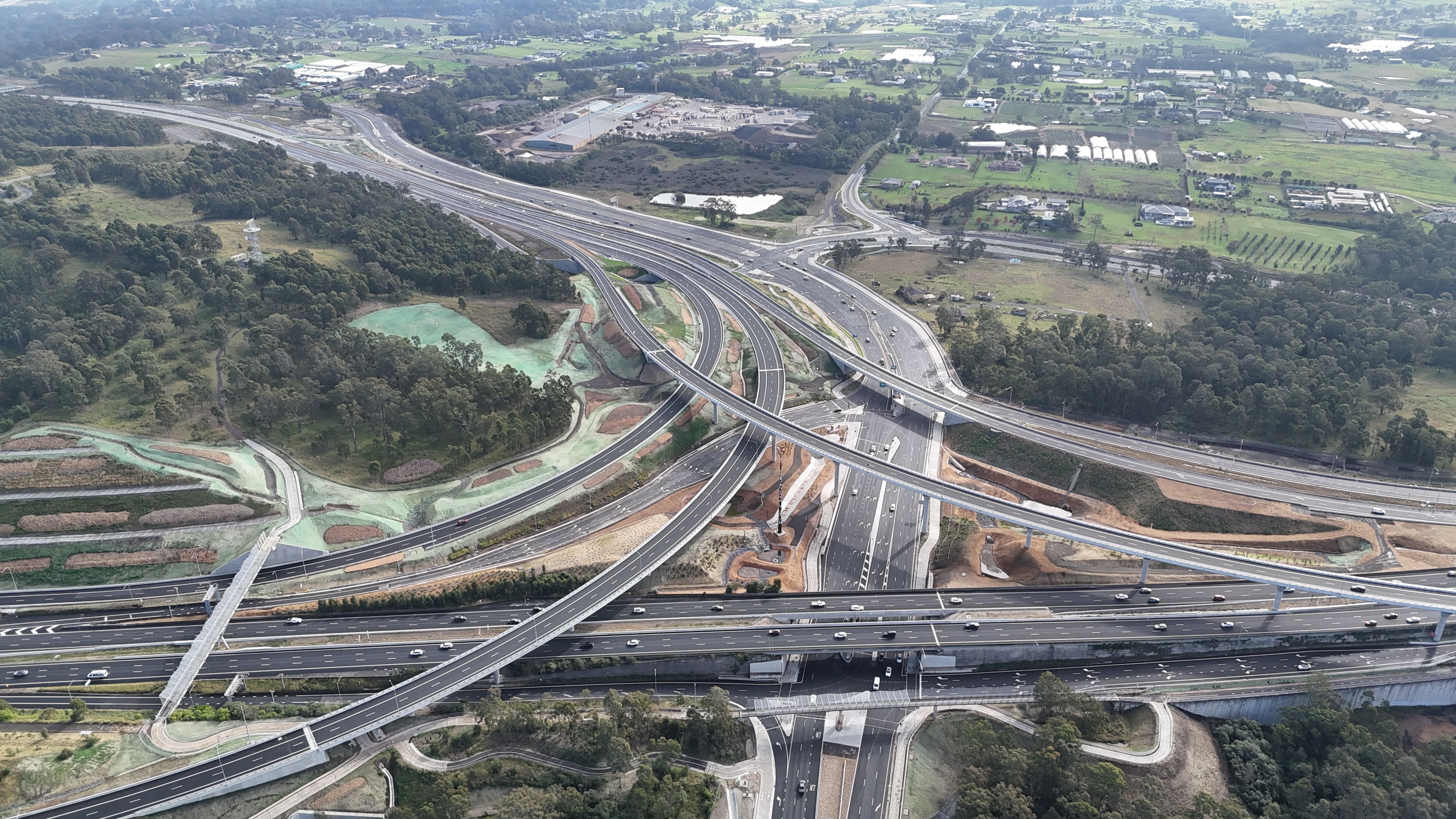
Delivered ahead of time and on budget while keeping one of Sydney’s busiest motorways moving, it’s another example of the smart thinking John Holland brings to complex infrastructure challenges.
Using a method that allowed bridges to be built and launched incrementally over live traffic, our team constructed seven new bridges to form the interchange while keeping around 180,000 motorists moving on the M7 every day.
That includes the longest incrementally launched curved road bridge in Australia, featuring both vertical and horizontal curves, alongside key connections linking traffic seamlessly between the M7 and M12.
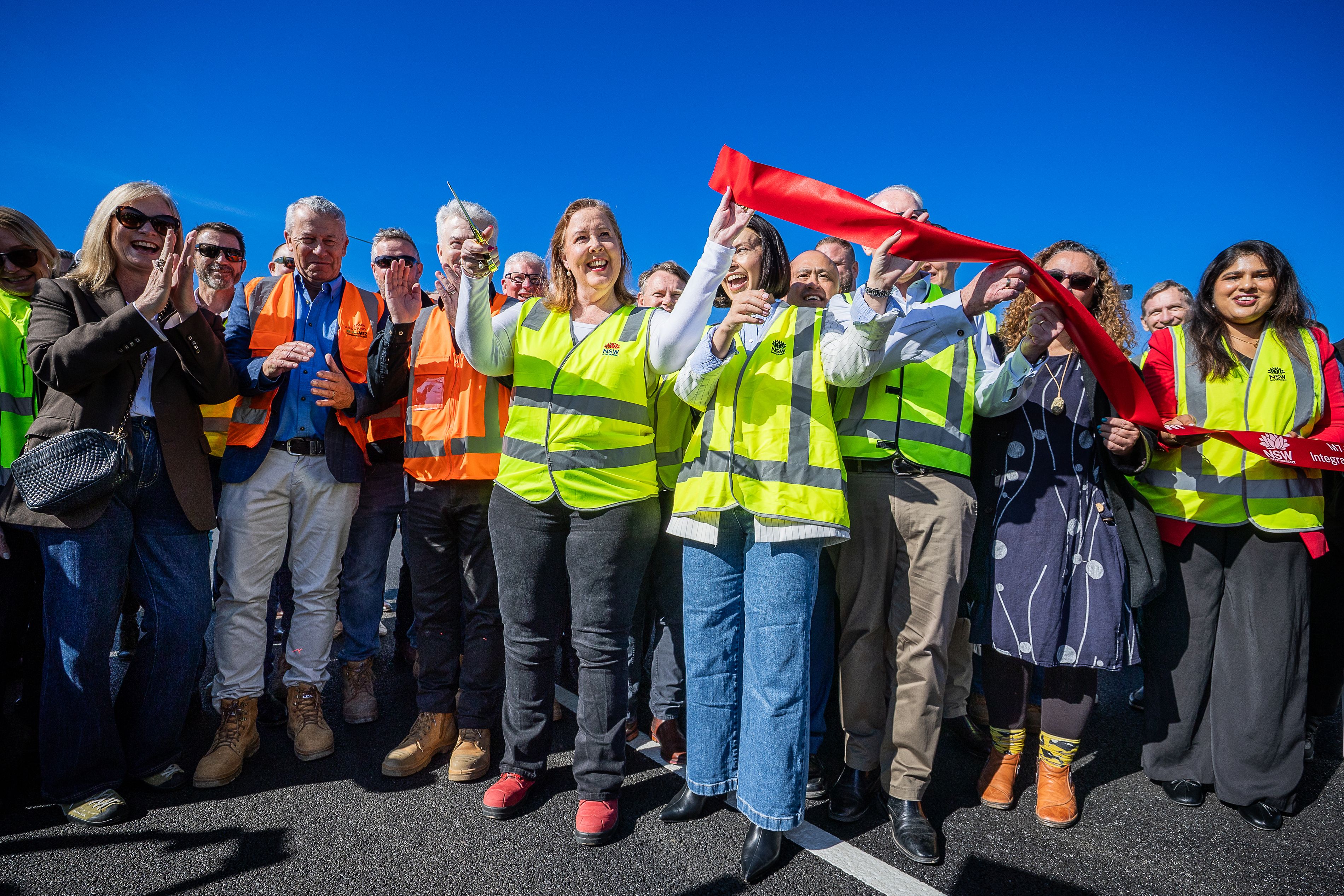
The interchange works were also complemented by significant upgrades to the M7 itself. This included the widening of the M7 to three lanes in each direction between Richmond Road and the M5 Motorway, upgrading 41 bridges along the corridor.
We also delivered a new connection between the M12 and Elizabeth Drive and realigned Wallgrove and Cecil Roads at Cecil Hills.
The result is less congestion, safer journeys and stronger freight links, with up to 13 minutes saved on southbound trips from Marsden Park to Liverpool.
A big thank you to the NSW Government, Transurban, Northwest Roads Group and our project partners and contractors for helping us deliver a project that will transform how Western Sydney moves for decades.
The M7-M12 Integration project adds to John Holland’s track record of delivering complex, city-shaping road projects in live traffic environments, creating the essential connections that link people, places and opportunities.